






.png)

Magnesium Hydroxide vs Aluminum Hydroxide: Which Is Better for Flame Retardant Applications?
_1773799140_WNo_1280d720.webp)
Introduction: MDH vs ATH in Halogen-Free Flame Retardants
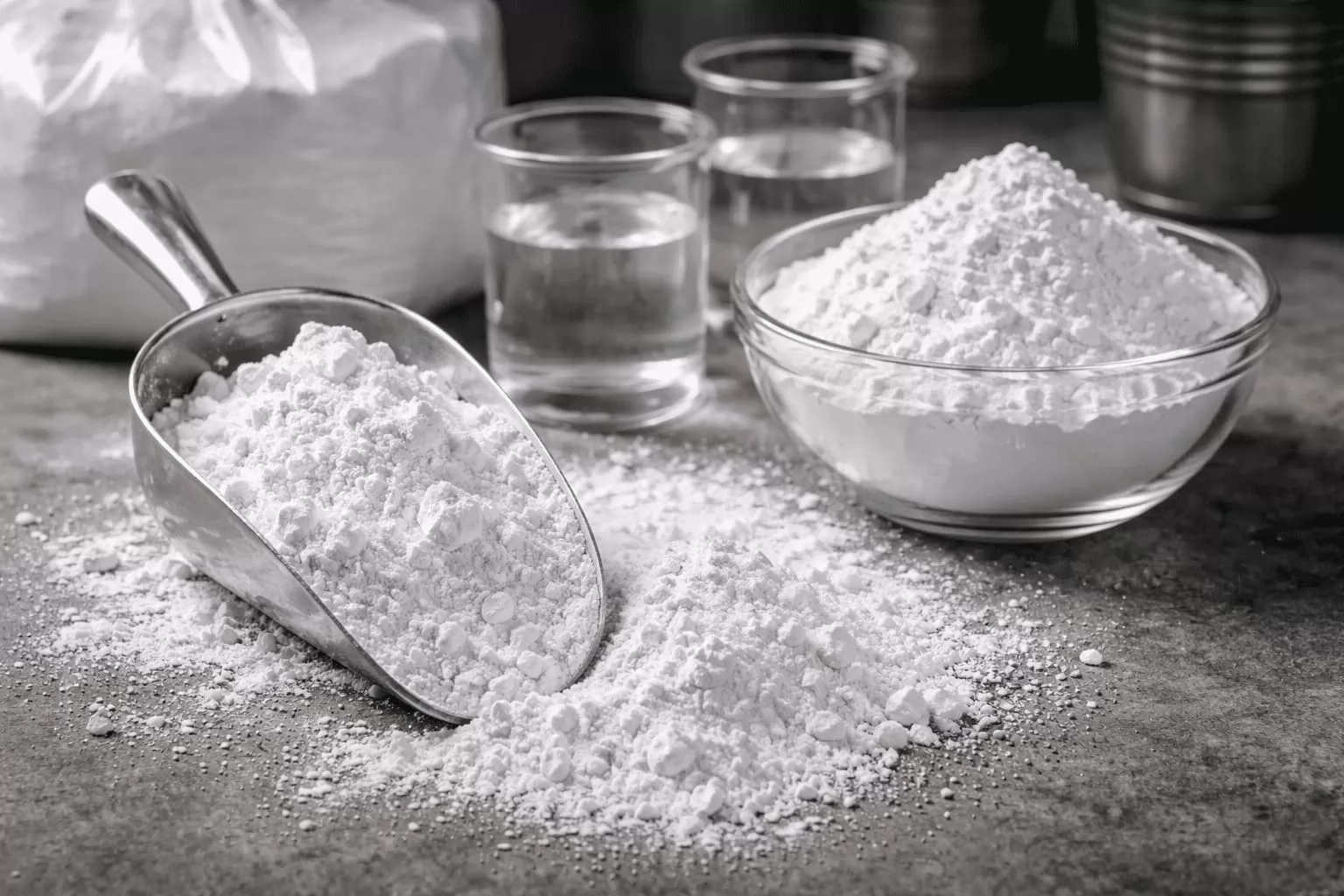
Magnesium hydroxide (Mg(OH)2) and aluminum hydroxide (Al(OH)3, ATH) are the two most widely used mineral fillers in halogen-free flame retardant (HFFR) polymers. Engineers and compounders often ask: which is better for flame retardant applications—magnesium hydroxide or aluminum hydroxide? The answer depends on polymer type, processing temperature, target standards (e.g. UL94, LOI), mechanical properties, and cost. This guide compares MDH vs ATH for cables, building materials, and engineering plastics, and shows when to choose each—or a synergistic MDH + ATH system.
KMT Industrial has supplied hexagonal magnesium hydroxide, precipitated MDH, ultrafine nano MDH, aluminum hydroxide, brucite, and AM3V ATO replacement for over 15 years. For formulation support on MDH loading, PVC cable compounds, or HFFR EVA/PE systems, contact KMT Industrial.
How Magnesium Hydroxide and Aluminum Hydroxide Work as Flame Retardants
Both magnesium hydroxide (MDH) and aluminum hydroxide (ATH) retard fire through an endothermic decomposition pathway: they release water vapor, dilute combustible gases, and leave a protective oxide char. The key difference is decomposition temperature:
- ATH typically decomposes around 180–220 °C, releasing water and forming alumina.
- MDH decomposes at roughly 330°C and above, making it suitable for higher-temperature processing and polymers that run hotter during extrusion or injection molding.
That single difference drives most of the MDH vs aluminum hydroxide decision in real formulations.
Magnesium Hydroxide vs Aluminum Hydroxide: Quick Comparison
| Factor | Magnesium Hydroxide (MDH) | Aluminum Hydroxide (ATH) |
|---|---|---|
| Decomposition temperature | Higher (~330 °C+); survives higher processing temps | Lower (~180–220 °C); limits peak processing temperature |
| Heat absorption (per gram) | High endotherm; strong cooling effect in the flame zone | High; excellent heat sink at lower temperatures |
| Typical loading for V-0 | Often 50–65%+ in polyolefins; polymer- and synergist-dependent | Similar high loadings in PE/EVA; well established in many systems |
| Rheology / processing | Can increase viscosity; surface-treated MDH improves dispersion (e.g. silane-coated grades) | Generally easier flow at equal loading in some systems; also benefits from coating |
| Best-fit polymers | PP, higher-temperature elastomers, some engineering plastics, high-temp cable compounds | EVA, PE, lower-temp thermoplastics and rubbers, many cable jackets |
| Smoke & char | Often favorable in HFFR cable and building applications when tuned with synergists | Proven track record; ATH + MDH blends used for balanced performance |
When Is Magnesium Hydroxide “Better”?
Magnesium hydroxide is often the better choice when:
- Processing or service temperature exceeds what ATH can tolerate without premature dehydration.
- You compound polypropylene or other polymers where MDH is the standard HFFR mineral.
- You need consistent flame performance in formulations where low-temperature water release from ATH would be a risk during manufacturing.
- Coated or nano-fine MDH (e.g. high-purity hexagonal or precipitated grades) is specified for dispersion, LOI, and mechanical balance—as offered in KMT’s HP series, precipitated MDH, and ultrafine nano lines.
Explore hexagonal magnesium hydroxide (HP series), precipitated magnesium hydroxide, and ultrafine nano magnesium hydroxide (P1 series) for polymer-specific recommendations.
When Is Aluminum Hydroxide “Better”?
Aluminum hydroxide (ATH) is often preferred when:
- Processing stays well below ~200 °C, so ATH remains stable through extrusion or molding.
- EVA, PE, or similar polyolefins are used at moderate temperatures where ATH has decades of commercial validation.
- Cost and supply favor ATH for a given specification, and thermal profile fits.
- You want to combine ATH with MDH or zinc borate for synergistic flame retardancy and smoke control in cable or building materials.
KMT supplies high-purity aluminum hydroxide for halogen-free flame retardant plastics and rubber. See wire and cable, building materials, and electronic & electrical applications.
MDH + ATH Together: Synergy in HFFR Formulations
Many successful HFFR cable compounds and building materials use both magnesium hydroxide and aluminum hydroxide, plus synergists (e.g. zinc borate, intumescent packages). The blend can balance processing window, LOI, mechanical properties, and cost. KMT Industrial supports customers with basic formulation guidance and lab trials for EVA, PE, PP, and PVC-related systems.
Application Snapshot: Cables, Building Materials, E&E
Wire and cable
LSZH / HFFR cables frequently use high loadings of MDH or ATH (or both). Topics such as optimal MDH loading for UL94 V-0, extrusion speed, and surface quality are central to commercial success—areas where experienced suppliers add value.
Building materials
Flame retardant panels and composites may specify mineral hydrates for smoke and fire performance; grade selection and surface treatment matter as much as MDH vs ATH choice.
Electronic and electrical
Compounds for housings and cables often require RoHS/REACH-friendly fillers; both ATH and MDH fit when matched to resin and process temperature.
Browse KMT application pages and the technical article hub for MDH loading, PVC cable, and HFFR guides.
Why Source MDH and ATH from KMT Industrial?
KMT Industrial (HK) Ltd focuses on magnesium hydroxide, precipitated MDH, brucite, hydromagnesite, aluminum hydroxide, and next-generation products such as AM3V (ATO replacement in PVC). With R&D centers, ISO-certified plants, and export to 30+ countries, KMT supports halogen-free flame retardant programs globally.
- Technical support: formulation advice, lab trials, testing support
- Product range: from standard grades to coated and fine-particle MDH/ATH
- Compliance: RoHS, EU REACH registration on relevant lines
Ready to optimize your HFFR formulation? Download the KMT Industrial MDH & ATH Catalogue (PDF) or contact us for a quote and technical discussion.
Frequently Asked Questions: MDH vs ATH
Is magnesium hydroxide better than aluminum hydroxide for flame retardants?
Not universally. MDH is better when higher decomposition temperature is required; ATH is often preferred for lower-temperature processing and many EVA/PE systems. The best choice is application-specific.
Can you use MDH and ATH together?
Yes. Blends are common in cable and building compounds to balance processability, flame performance, and cost.
What loading of MDH is needed for UL94 V-0?
Loadings depend on polymer, synergists, and part thickness. Typical ranges are often 50–65%+ in polyolefins; exact levels should be validated by testing.
Where can I buy magnesium hydroxide and aluminum hydroxide for flame retardants?
KMT Industrial supplies magnesium hydroxide and aluminum hydroxide for HFFR applications worldwide. Contact via kmtindustrial.com/contact-us.
Related Technical Articles from KMT Industrial
Deepen your HFFR knowledge with these guides on kmtindustrial.com/article:
- How Magnesium Hydroxide Affects Polymer Rheology and Processing
- Guide to Magnesium Hydroxide Flame Retardants for Cables
- Different Grade of Aluminum Hydroxide Mechanical Property Compare
- What Is the Optimal MDH Loading to Reach UL94 V-0?
Conclusion
Magnesium hydroxide vs aluminum hydroxide is not a one-size-fits-all contest: MDH wins on high-temperature stability; ATH wins on maturity in low-temperature systems and cost-effective EVA/PE formulations. For many projects, the best solution is a data-driven blend plus the right grade (particle size, coating, purity). Partner with an experienced magnesium hydroxide manufacturer and ATH supplier such as KMT Industrial to shorten development cycles and improve flame retardant reliability.
Your Name*
Your Email*
-
2026-Mar-18Magnesium Hydroxide vs Aluminum Hydroxide: Which Is Better for Flame Retardant Applications?Compare magnesium hydroxide (MDH) vs aluminum hydroxide (ATH) for halogen-free flame retardants. Decomposition temp, loading, cables & polymers. Expert support from KMT Industrial.
-
2026-Feb-27How to Reduce Cable Compound Costs by Optimizing MDH FormulationDiscover proven strategies to reduce HFFR cable compound costs through MDH formulation optimization. Learn how to improve extrusion throughput, enhance mechanical properties, and maximize your ROI with practical implementation guidance.
-
2026-Jan-30What Is the Optimal MDH Loading to Reach UL94 V-0?Master MDH loading strategies for UL94 V-0 certification. Get polymer-specific loading percentages, formulation tips, and synergistic additive recommendations from KMT Industrial's technical experts.


-

 +86-931-7653361
 Room 1212, 1213, Jinhe Building, No. 1264 Beibinhe West Road, Anning District, Lanzhou City, Gansu Province, China.


-
Quick Links
-
Products


