






.png)

Benefits of Using Magnesium Hydroxide in Halogen-Free Flame Retardant Compounds
Driven by strict environmental directives like RoHS and REACH, traditional halogenated flame retardants are becoming obsolete. For compounding engineers formulating Halogen-Free Flame Retardant (HFFR / LSZH) materials—particularly for EV cables, photovoltaic systems, and premium building materials—Magnesium Hydroxide (MDH) has emerged as the definitive solution.
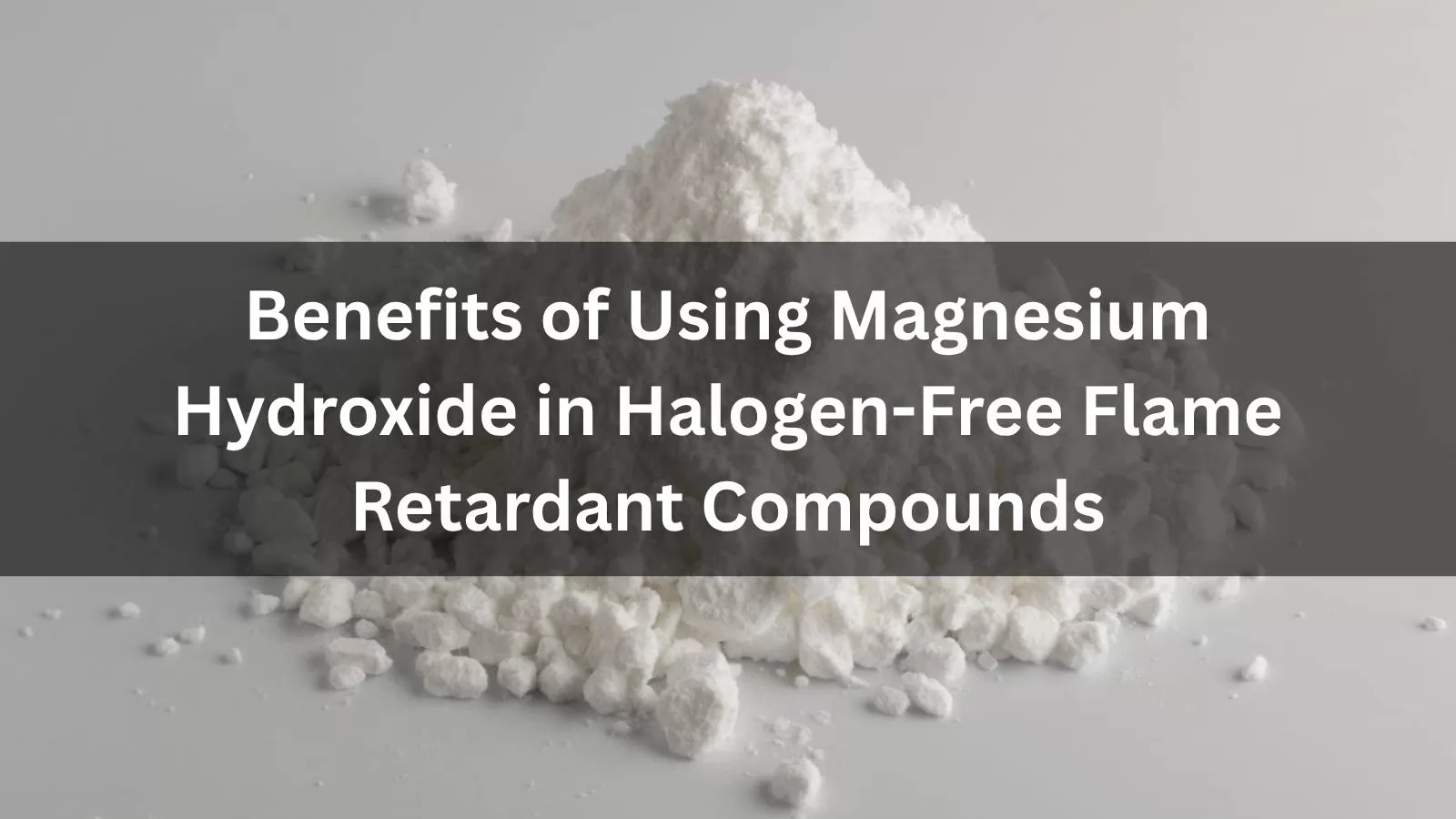
However, not all MDH grades perform equally. Advanced synthetic grades featuring engineered hexagonal crystal morphology offer superior thermal, mechanical, and safety advantages over standard fillers. This article explores the core technical benefits of adopting premium MDH in modern HFFR formulations.
1. Exceptional Thermal Stability: Shifting the Processing Window
The most critical bottleneck in thermoplastic compounding is the processing temperature. For years, Aluminum Hydroxide (ATH) was the conventional mineral choice. However, ATH begins to decompose at approximately 200°C, with a recommended safe processing temperature below 208°C. This severely limits its application. When processing engineering plastics like Polypropylene (PP), Polyamide (PA), or high-performance EVA blends, compounding temperatures regularly cross this threshold. Using ATH causes premature decomposition, leading to severe foaming, gas bubbles, and surface defects in the extruded profile.
Synthetic Magnesium Hydroxide offers a significantly higher thermal ceiling. While its thermal decomposition onset temperature reaches 330°C to 340°C (standard literature values), the recommended safe processing temperature for most MDH grades is below 300°C. This expanded thermal window allows twin-screw extruders to run at optimal rates without risking material degradation or surface imperfections—a critical advantage over ATH for engineering plastic applications.
Thermal and Physical Performance: MDH vs. ATH
| Property | Aluminum Hydroxide (ATH) | Magnesium Hydroxide (MDH) |
|---|---|---|
| Decomposition Onset* | ~200°C | ~330°C – 340°C |
| Recommended Processing Temp. | < 208°C | < 300°C |
| Endothermic Heat Absorption* | ~1.17 kJ/g | ~1.37 kJ/g |
| Mohs Hardness | 2.5 | 2.5 – 3.0 |
*Thermal decomposition onset and heat absorption values are standard literature references.
2. The Multi-Functional Flame Retardant Mechanism
MDH does not merely act as an inert filler; it actively suppresses fire through a multi-stage endothermic reaction when exposed to temperatures above its decomposition point:
This single chemical process triggers four highly effective physical mechanisms that disrupt combustion simultaneously:
1. Heat Absorption
The reaction absorbs high amounts of heat energy, cooling the polymer surface below ignition point.
2. Gas Dilution
It releases roughly 31% of its weight as water vapor, diluting oxygen and combustible pyrolysis gases.
3. Char Barrier
The resulting Magnesium Oxide (MgO) forms a robust, non-toxic, insulating ceramic layer over the matrix.
4. Smoke Suppression
The alkaline MgO char layer catalyzes the recombination of soot, drastically reducing total smoke density.
3. High-Performance Smoke and Corrosion Suppression
In modern fire safety standards, smoke density and toxicity are heavily regulated metrics. Halogenated retardants generate dense, dark smoke filled with highly toxic and corrosive acid gases (such as HCl or HBr). These gases pose acute life safety risks and permanently ruin nearby electronic circuitry and industrial components.
MDH stands out as a dedicated smoke suppressant, creating zero corrosive gas byproducts. To accelerate the transition from legacy halogen systems, advanced formulations are now utilizing drop-in ATO (Antimony Trioxide) Replacement agents. Based on co-precipitated aluminum-magnesium layered double hydroxide (LDH) technology, these replacements deliver high LOI (≥30) and significantly reduced smoke density. When paired with high-purity synthetic MDH, these replacements optimize flame retardant synergy without the heavy environmental tax of antimony and bromine, ensuring compliance with strict low-smoke specifications in enclosed public spaces.
4. Overcoming Mechanical Trade-offs with Hexagonal and Ultrafine Morphology
A long-standing challenge with mineral flame retardants has been the high loading level (often 50% to 65% by weight) needed to guarantee a reliable UL94 V-0 rating. Heavy loading with irregular ground minerals often degrades tensile strength, elongation at break, and compound flexibility, causing the extruded jacket to turn brittle.
Advanced particle engineering effectively addresses this issue. Controlled Precipitated Magnesium Hydroxide technology produces regular, sheet-like hexagonal platelets (flake type structure) rather than jagged, irregular structures. Selecting a dedicated Hexagonal Magnesium Hydroxide grade offers substantial structural benefits:
- Overlapping Scale Arrangement: The flat hexagonal platelets pack uniformly when processed, creating an overlapping structural layout that bolsters the physical integrity of the protective char barrier during fire exposure.
- Optimized Stress Distribution: Eliminating irregular, sharp-edged particles prevents the formation of localized stress concentration points that cause mechanical failure under tension.
- Enhanced Polymer Wetting: The uniform crystalline faces allow base polymers (like EVA, POE, or XLPE) to coat the filler particles smoothly, preserving excellent elongation properties and compound melt flow.
For high-end applications like ultra-thin wall automotive wires or complex profile extrusions, even minor mechanical compromises are unacceptable. In these scenarios, compounding engineers pivot to Ultrafine Magnesium Hydroxide. With a median particle size (D50) of 0.8–1.2 μm (sub-micron range), these ultrafine fillers maximize the effective interfacial contact area with the polymer matrix, which drastically enhances physical toughness, impact resistance, and surface aesthetics while maintaining superb flame retardancy.
5. Cost-Effective Alternatives for Standard Formulations
While ultra-pure synthetic grades are mandatory for high-spec data cables and high-voltage EV insulation, cost-sensitive building materials require a different economic balance. In architectural applications where electrical conductivity risks are lower, compounders can successfully implement natural mineral options.
Finely ground natural Brucite (≥90% Mg(OH)₂) and natural Hydromagnesite (≥98% HMH) serve as excellent, budget-friendly mineral flame retardants. These ground minerals provide highly reliable eco-friendly fire protection for commercial carpet backings, standard building panels, and conveyor belts, serving as an ideal entry-level solution for eco-conscious manufacturing.
Important Processing Note: Hydromagnesite Temperature Limitation
While natural minerals offer cost advantages, Hydromagnesite has a processing temperature limit of below 200°C (similar to ATH), as it releases water at approximately 220°C. This makes it suitable for PVC, EVA, and other low-temperature polymers, but not for high-temperature engineering plastics like PP or PA. Natural Brucite shares similar temperature constraints. For applications requiring processing above 200°C, synthetic MDH remains the necessary choice.
6. Maximizing Compound Efficiency via Surface Modification
Even with optimized crystal structures, compounding a hydrophilic mineral into a hydrophobic polymer matrix demands an effective interfacial bridge. Advanced chemical surface treatments—such as stearic acid or silane coupling agents—maximize the industrial utility of hexagonal MDH fillers:
| Performance Property | Untreated Mineral Fillers | Surface-Treated Hexagonal MDH |
|---|---|---|
| Moisture Resistance | High moisture absorption, risks compound aging. | Hydrophobic surface repels water, extending shelf life. |
| Extrusion Rheology | High melt viscosity, limits line speeds, high torque. | Acts as an internal lubricant, reducing extruder torque. |
| Surface Aesthetics | Poor dispersion, leads to rough, "shark-skin" surfaces. | Flawless dispersion, yields smooth, high-gloss finishes. |
Critical Formulation Insight: Agglomeration Control
In high-fill HFFR systems, inadequate dispersion creates localized mineral agglomerates. These agglomerates act as structural faults that cause micro-cracks under mechanical stress and trigger premature breakdown during fire testing. Proper surface coating is non-negotiable for achieving reproducible extrusion quality.
Grade Selection Guide: Choosing the Right Mineral Filler
| Filler Grade | Key Technical Features | Primary Recommended Applications |
|---|---|---|
|
Hexagonal MDH (HP Series) |
|
High-spec EV insulation, solar cables, engineering plastic compounding (PP, PA, EVA, POE). |
|
Ultrafine MDH (P1 Series) |
|
Thin-wall automotive wiring harnesses, premium consumer electronics, cost-optimized HFFR formulations. |
|
Precipitated MDH (PM Series) |
|
High-speed fiber optic jackets, telecom infrastructure, delicate electronics, medical-grade applications. |
|
Natural Brucite (B Series / 3.5 Series) |
|
Natural-colored LSHF/LSZH compounds, flue gas desulfurization, wastewater treatment, architectural applications. |
|
Hydromagnesite (HM Series) |
|
PVC flame retardant, ATO replacement (15phr HM2V = 1phr ATO), EPDM, NBR, building materials (B1/A2 ACP panels). |
Primary Applications for Advanced MDH Compounds
Thanks to this balance of physical properties, high-purity synthetic MDH is preferred for several demanding technical applications:
- Automotive Wiring: Providing flexible, thin-wall insulation for high-voltage New Energy Vehicle (NEV) and EV charging cables.
- Photovoltaic Systems: Formulating durable solar power cables built to withstand severe outdoor weathering and thermal aging.
- Data & Telecom Infrastructure: Compounding high-speed fiber optic jacketing that demands low-smoke zero-halogen performance and strict dimension stability.
- Architectural Aluminum Panels (ACP): Serving as a high-efficiency fire-retardant core layer to help building facades pass rigorous Class A2 or B1 fire safety tests.
Conclusion
Transitioning to eco-friendly, halogen-free compounding does not require sacrificing mechanical durability or extrusion throughput. By selecting premium synthetic Magnesium Hydroxide with controlled hexagonal crystal morphology and customized surface chemistry, compounders can safely fulfill the market's strictest fire-retardant, low-smoke, and low-corrosion expectations.
Optimizing Your Next HFFR Compounding Project?
Request customized formulation data sheets, technical consulting, or raw material product samples.
Contact UsFrequently Asked Questions
Your Name*
Your Email*
-
2026-Sep-03Nonlinear Flame-Retardant Synergism of Antimony Trioxide in Flexible PVCLearn how antimony trioxide improves flame retardancy in flexible PVC, with LOI data, ATO loading effects, synergistic mechanisms, and efficiency limits beyond 2 phr.
-
2026-Aug-06Improving LOI (Limiting Oxygen Index) with Magnesium HydroxideMagnesium Hydroxide as an effective low smoke flame retardant solution, offering excellent heat absorption, smoke suppression, and halogen-free performance for cable compounds, polymer materials, and industrial applications requiring enhanced fire safety and environmental compliance.
-
2026-Jul-20Magnesium Hydroxide for EPDM Rubber: Benefits, Dosage, and TipsThis comprehensive guide explains how Magnesium Hydroxide acts as an eco-friendly, high-thermal-stability flame retardant for EPDM rubber in automotive and cable applications, detailing optimal dosage, processing tips, and the premium surface-modified solutions offered by KMT.


-

 +86-931-7653361
 Room 1212, 1213, Jinhe Building, No. 1264 Beibinhe West Road, Anning District, Lanzhou City, Gansu Province, China.


-
Quick Links
-
Products


