






.png)

What ls the Difference Between Natural and Synthetic MDH?
In the formulation of Halogen-Free Flame Retardant (HFFR) and Low Smoke Zero Halogen (LSZH) cable compounds, achieving the perfect balance of flame retardancy, mechanical properties, and processability is a constant challenge. Magnesium Hydroxide (Mg(OH)₂ or MDH) has long been established as the green flame retardant of choice due to its high thermal decomposition temperature (340℃), which allows for safe processing in high-temperature polymers without premature activation.
However, polymer chemists and chemical procurement managers often face a critical selection dilemma: Should you utilize Natural MDH (ground Brucite mineral) or opt for chemically precipitated Synthetic MDH?
This comprehensive guide breaks down the essential mineralogical, chemical, and mechanical differences between these two materials. Discover how partnering with an industry-leading, ISO-certified source manufacturer can resolve your processing bottlenecks, stabilize your compound quality, and secure a highly competitive, REACH-compliant global supply chain.
Table of Contents
Understanding Natural MDH
Natural MDH is produced by the physical processing of Brucite, a naturally occurring magnesium hydroxide mineral deposit.
The Production Process: The mineral is mined, crushed, ultra-finely dry-ground, and classified to achieve the target particle size distribution (typically ranging from a d₅₀ of 1.5μm to 5.0μm).
The Advantages: Because the production relies on mechanical milling rather than complex chemical synthesis, Natural MDH is highly cost-effective. It serves as an excellent budget-friendly flame retardant for applications with less demanding mechanical or electrical insulation requirements.
The Limitations:
Irregular Morphology: Under scanning electron microscopy (SEM), milled natural Brucite particles appear as irregular, sharp, and fibrous fragments. This irregular shape creates high friction within the polymer melt during extrusion, significantly increasing processing torque and wear on extruder screws.
Impurity Profile: Natural Brucite inherently contains mineral impurities such as iron oxides (Fe₂O₃), silica (SiO₂), and calcium compounds. These impurities can degrade the electrical volume resistivity of cable jackets and lead to lower overall whiteness (typically around 85% - 92%).
Undersanding Synthetic MDH
Synthetic MDH is a high-purity, chemically engineered flame retardant produced via controlled precipitation reactions, typically utilizing purified magnesium salts sourced from brine, seawater, or magnesite.
The Structural Advantage: The chemical precipitation process allows manufacturers to control the crystallization kinetics perfectly. This results in regular hexagonal platelike crystals with a highly uniform structure.
The Mechanical and Processing Benefits: The uniform hexagonal platelets slide easily past one another within a polymer matrix, acting almost like a solid lubricant. This drastically reduces melt viscosity and processing torque compared to the jagged structures of natural Brucite.
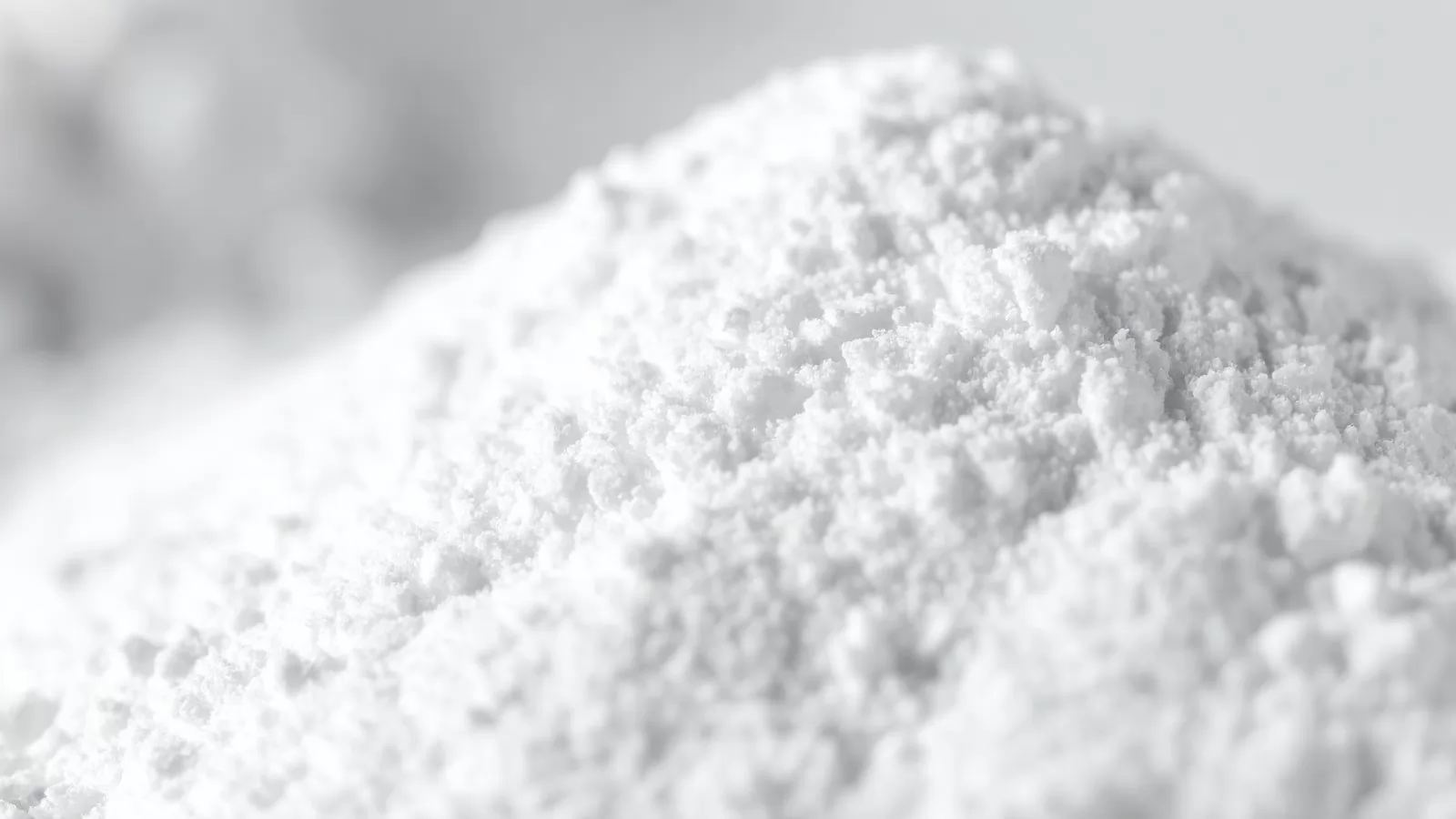
The Purity Profile: Synthetic MDH boasts a chemical purity of >99.5%, with virtually negligible heavy metal or iron content. It features a exceptionally narrow particle size distribution (d₅₀ typically tightly controlled around 1.0 - 2.0μm) and superb whiteness (>98%), making it the gold standard for high-end color-sensitive plastics and thin-walled LSZH wire and optical fiber jackets.
Technical Comparison
| Parameter | Natural MDH (Brucite) | Synthetic MDH (Precipitated) |
|---|---|---|
| Purity (Mg(OH)₂) | 90.0% - 95.0% | > 99.5% |
| Crystal Morphology | Irregular, fibrous, and jagged | Regular hexagonal platelets |
| Iron Content(Fe₂O₃) | Typically 0.1% - 0.5% (Higher) | < 0.01%(Negligible) |
| Whiteness(R₄₅₇) | 85% - 92% | > 98% |
| Particle Size Distribution | Broad(d₅₀ = 1.5 -5.0 μm) | Ultra-narrow(d₅₀ = 1.0 - 2.0 μm) |
| Impact on Melt Rheology | High viscosity, high torque | Lower viscosity, smooth extrusion |
| Relative Cost | Highly Economical | Premium |
To help procurement managers and formulation chemists compare these two materials side-by-side, the table below highlights their key technical differences:
The Flame-Retardant MechanismBoth natural and synthetic MDH share the same fundamental flame-retardant chemistry. When exposed to heat exceeding 340℃, they undergo an endothermic decomposition, absorbing heat and releasing water vapor to dilute combustible gases.
However, high-purity Synthetic MDH forms a much tighter, highly cohesive, and continuous magnesium oxide (MgO) protective char barrier. Because natural Brucite contains fluxing mineral impurities (like silica and iron), its resulting char layer is often more porous and brittle, allowing heat and oxygen to penetrate the polymer matrix more easily.
The High-Loading Dilemma
The primary challenge of working with inorganic flame retardants like MDH is the high loading requirement. To pass stringent safety standards such as UL 94 V-0, formulators must typically load the polymer matrix (such as EVA, PE, or polyolefins) with 50 wt% to 65 wt% of MDH.
At these extreme loading levels, untreated inorganic powders aggregate and clump together, causing:
- Severe drop in tensile strength and elongation at break (the compound becomes brittle and snaps).
- Massive spikes in melt viscosity, leading to high extrusion torque, die drool, and rough surface finishes on the final extruded cables.
The Solution: Advanced Surface Modification
To prevent these processing failures, the hydrophilic (water-attracting) surface of the MDH particles must be modified to become lipophilic (compatible with organic polymers).
By coating the particles with active silane coupling agents or specialized polymeric fatty acids, the surface chemistry is transformed. This surface treatment ensures uniform dispersion of the hexagonal platelets within the polymer matrix, dramatically lowering melt viscosity, enhancing extrusion throughput, and restoring the physical flexibility and elongation properties of the final product.
KMT: Your Certified Global Partner for Advanced Flame Retardants
When sourcing high-performance flame retardants for global markets, consistency, regulatory compliance, and customized technical properties are non-negotiable. KMT Industrial is a premier manufacturer specializing in advanced halogen-free flame retardants.
KMT supports global B2B procurement and engineering teams with:
Full Regulatory Compliance: KMT products are manufactured under strict ISO 9001 quality systems and carry full EU REACH registration, guaranteeing smooth import clearances and regulatory compliance for European and North American markets.
KMT-Syn Series (Synthetic MDH): Engineered with a highly uniform hexagonal plate structure, low ionic conductivity, and high whiteness, making it perfect for high-speed LSZH extrusion lines and premium automotive compounds.
KMT-Nat Series (Natural MDH): Highly optimized, ultra-finely ground Brucite surface-treated with custom silanes to deliver high flame retardancy and smooth processing for cost-sensitive structural applications.
Tailored Surface Modifications: KMT's in-house R&D team can customize the surface coating chemical (silanes, stearates, or customized blends) to perfectly match your specific carrier resin (EVA, PO, PP, PE, or PVC).
Conclusion
Selecting between natural and synthetic MDH is a strategic engineering decision that dictates your product's performance, processing efficiency, and ultimate market pricing. While natural Brucite offers an excellent economic entry point for basic applications, chemically precipitated Synthetic MDH is irreplaceable for high-specification LSZH cables and thin-walled wire compounds that demand flawless physical properties and low extrusion torque.
Partnering with a globally verified manufacturer like KMT secures your business direct access to factory-direct pricing, custom surface modifications, and complete REACH certification compliance.
Your Name*
Your Email*
-
2026-Sep-03Nonlinear Flame-Retardant Synergism of Antimony Trioxide in Flexible PVCLearn how antimony trioxide improves flame retardancy in flexible PVC, with LOI data, ATO loading effects, synergistic mechanisms, and efficiency limits beyond 2 phr.
-
2026-Aug-06Improving LOI (Limiting Oxygen Index) with Magnesium HydroxideMagnesium Hydroxide as an effective low smoke flame retardant solution, offering excellent heat absorption, smoke suppression, and halogen-free performance for cable compounds, polymer materials, and industrial applications requiring enhanced fire safety and environmental compliance.
-
2026-Jul-20Magnesium Hydroxide for EPDM Rubber: Benefits, Dosage, and TipsThis comprehensive guide explains how Magnesium Hydroxide acts as an eco-friendly, high-thermal-stability flame retardant for EPDM rubber in automotive and cable applications, detailing optimal dosage, processing tips, and the premium surface-modified solutions offered by KMT.


-

 +86-931-7653361
 Room 1212, 1213, Jinhe Building, No. 1264 Beibinhe West Road, Anning District, Lanzhou City, Gansu Province, China.


-
Quick Links
-
Products


